
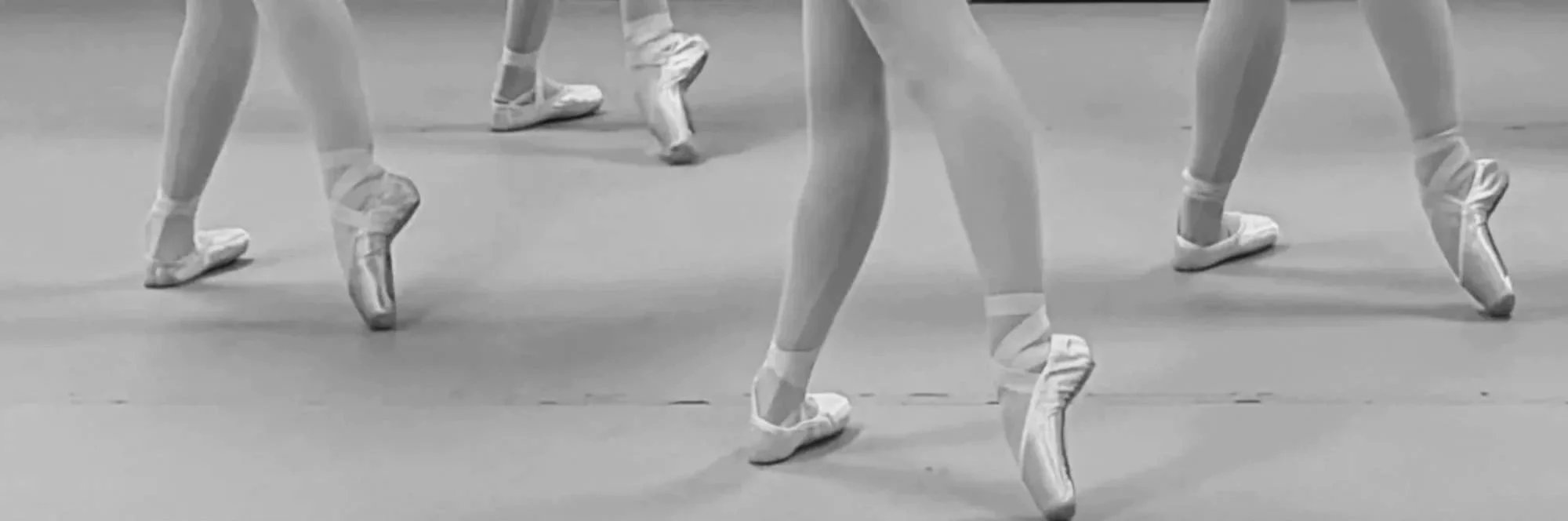
Core Ballet Development with Elective Dance Training
PROGRAMS for ALL LEVELS
Creative Movement
Pre-Ballet
Beginner Levels
Intermediate Levels
Intermediate / Advanced
The Conservatory
Core Ballet
Ballroom
Contemporary
Jazz
Modern
Pilates
Tap
Electives
Injury prevention is fundamental to our program and practices. We are guided by collaboration with dance‑medicine professionals and informed by current best practices in dance education and dance science.
We prioritize communication between students, teachers, families, and practitioners to ensure that the preventative and rehabilitative needs of each student are met.
Injury prevention strategies are developed through regular cross-training, yoga, and Pilates classes, and ongoing community education for families, students, and faculty.
Injury Prevention
All NEBA dancers are required to study ballet weekly.
Jazz, Tap, Modern, Contemporary, and Ballroom are designed for NEBA students enrolled in Ballet.
Class placement is at the discretion of the NEBA faculty and can be changed at any time throughout our season.
Private lessons are designed for NEBA students only (more info here).
Although not required, we recommend that students participate in a full schedule offered to their specific level placement.
The entire document covering NEBA Policies and Procedures can be found here.
Class Policies
— FROM FOUNDATIONAL TO ADVANCED TRAINING
Core Development
Our classical ballet technique program progresses from fundamentals through advanced levels. We draw from an eclectic syllabus, focusing on clean, unaffected technique and adaptability so that students can transition into many different styles of ballet in their future endeavors.
Classes focus on correct technique rather than “tricks.” At all levels, proper alignment of the foot, ankle, knee, hips, back, ribs, and neck is stressed. Students are expected to learn ballet vocabulary and build increasing coordination, strength, flexibility, musicality, and artistry with repetition, effort, attention, and time. Dancers become increasingly able to learn combinations quickly and to reverse them. Dancers are expected to apply corrections and retain them from class to class.
Young dancers in Beginning Ballet levels work facing the barre to ensure proper placement and are taught ballet etiquette and expectations. Intermediate level classes introduce new vocabulary, longer and more sophisticated combinations, and pre-pointe (and for some, pointe) work. Our Intermediate / Advanced students are fluent in all ballet terminology and can link steps together fluidly. If they take the requisite number of classes per week, they may solidify their strength on pointe, including taking full classes en pointe.

Adaptive Ballet —
Adaptive Ballet welcomes dancers with physical, cognitive, and developmental disabilities, with no age requirement. Classes are tailored to each student’s abilities and goals, offering a supportive, encouraging space where every dancer can experience the joy of ballet at their own pace.
Through the music, vocabulary, and movement of classical ballet, dancers build coordination, balance, body awareness, and musicality, along with confidence and friendships that extend well beyond the studio.
Creative Movement —
Creative Movement serves as our introductory level of our early childhood classical ballet training program, welcoming preschool aged children into the world of dance through imagination, music, and joyful movement exploration. This class builds essential coordination, rhythm, and body awareness while nurturing creativity and confidence in a supportive environment. Dancers participate in a structured class that blends imaginative play with props through stretching, marching, galloping, balancing, and leaping while exploring spatial awareness and musicality. This class fosters a young dancer's imagination, listening skills, and independence and will instill a love of dance.
Creative Movement is a one hour class offered once a week.
Pre Ballet 1 —
Pre Ballet 1 builds on the imaginative foundation of our Creative Movement class and introduces dancers to age-appropriate elements of classical ballet technique. This class is designed for preschool through early elementary dancers. While dancers begin to learn basic ballet terminology, they will develop coordination, body awareness, and confidence. Like Creative Movement, Pre Ballet 1 is a structured class of stretching, marching, galloping, balancing, and leaping while exploring basic ballet positions of the feet and arms and incorporating purposeful alignment. Throughout the years of Pre Ballet, dancers will grow in musicality, spatial awareness, and classroom skills while discovering the joy and discipline of ballet.
Pre Ballet 1 is a one-hour class offered once a week.
Pre Ballet 2 —
Pre Ballet 2 prepares young dancers for the structure and expectations of a formal ballet class. This class is designed for early elementary dancers. Pre Ballet 2 builds on the skills developed in Creative Movement and Pre Ballet 1 and will focus on strengthening coordination, body awareness, and confidence while expanding their ballet vocabulary. Dancers begin learning the foundational elements of classical ballet technique, including proper placement, basic positions of the arms and feet, balance, and how to transfer weight with control. Throughout the year, dancers practice putting steps together in simple combinations, developing musicality, spatial awareness, and readiness for our beginner ballet levels.
Pre Ballet 2 is a one-hour class offered once a week, and students are encouraged to study tap.
Creative Movement, Pre Ballet 1, and Pre Ballet 2 provide a smooth, supportive transition into our Beginner Ballet levels by blending creativity with foundational technique in an encouraging, developmentally appropriate environment.
Beginner 1 & 2 —
Beginner 1 & 2 serve as our foundational level in our after-school classical ballet training program. Dancers will attend a 1.5-hour ballet class, 45 minutes of barre, and 45 minutes of centre that is offered twice a week. Students will continue developing basic ballet technique, focusing on placement, alignment, turnout, and coordination.
Throughout the year, dancers will expand their ballet vocabulary and begin to understand how individual steps connect to create more detailed combinations, building confidence in movement, transitions, and musicality. Dancers at these levels are encouraged to study twice a week as well as participate in jazz, tap, and ballroom.
Intermediate 1 & 2 —
Intermediate 1 & 2 builds directly on the classical ballet training that has been established in Beginner 1 & 2. Dancers will attend a 1.5-hour ballet class, 45 minutes of barre, and 45 minutes of centre that is offered three times a week. Students will continue to deepen their understanding of placement, alignment, turnout, and focus on applying these principles consistently throughout both barre and centre.
As Dancers expand their ballet vocabulary, this will allow them to work more complex combinations, developing stamina and clarity of correct technique at barre and centre. At these levels we emphasize stability of proper placement, control of correct technique as we build on longer combinations, as well as musicality and artistry development. Dancers are encouraged to study three times a week as well as studying jazz, tap, modern, and ballroom.
Intermediate 3 & 4 —
Intermediate 3 & 4 are designed for dancers in middle school as well as high school. Dancers will attend a 1.5-hour ballet class, 45 minutes of barre, and 45 minutes of centre that is offered five times a week. Classes introduce more advanced concepts during both barre and center. Exercises become more complex, emphasizing clarity of technique, stamina of proper placement, and the ability to maintain correct technique through increasing tempos, directional changes, and weight transfers.
Students will continue to be encouraged to develop artistry and musicality during both barre and centre. Dancers are encouraged to study five times a week as well as studying jazz, tap, modern, contemporary, and ballroom.
Pointe is only allowed for students who have been placed en pointe by a NEBA faculty member and are required to study two ballet classes along with one pointe class.
Intermediate / Advanced 1 & 2 —
Intermediate / Advanced 1 & 2 are the highest levels in our after-school classical training program and are designed for high school-age dancers. Dancers will attend a 1.5-hour ballet class, 45-minute barre, and 45-minute center that is offered 5 times a week.
This level of training is for a dedicated dancer with a strong, technical foundation. These classes will continue to deepen the classical technique while developing the precision, stamina, and artistic musical expression that is required for this level. Dancers at these levels are encouraged to train six times a week as well as studying jazz, tap, modern, contemporary, and ballroom.
Pointe is only allowed for students who have been placed en pointe by a NEBA faculty member and are required to study two ballet classes along with one pointe class.
The Conservatory —
Our daytime pre-professional program prepares dancers for the realities of life in a professional ballet company.
Beyond technique and artistry, students learn to navigate casting expectations, rehearsal etiquette, and understudy responsibilities while performing corps de ballet and soloist roles in both classical repertoire and new works.
Structured choreography classes give students the chance to create on their peers with faculty support.
The program helps highly motivated dancers identify their strengths and become more versatile, employable artists — with workshops on building a ballet resume for company and college auditions, and faculty guidance on filming video auditions.
An evidence-based injury prevention program helps dancers and families learn to care for both mind and body.
Students train 5–6 days per week, with supervised academic study time and a dedicated mentor available.
— PROVIDING BALANCE AND ADDITIONAL STRUCTURE
Elective Classes
Elective classes are complementary to core ballet and build the versatility, musicality, and body awareness that support and enrich a dancer’s classical technique. Ballroom, Contemporary, Jazz, Modern, Pilates, and Tap each draw on their own distinct vocabulary and tradition, while reinforcing the coordination, strength, and artistry developed at the ballet barre.
Classes progress by level, from foundational skills — basic footwork, isolations, simple traveling steps — to the faster tempos, longer combinations, and stylistic nuance expected of more advanced dancers. Jazz and Tap are offered at every level, from Beginner through The Conservatory, while Contemporary is introduced starting at Intermediate 3/4 once dancers have a stronger technical foundation to build on.
Though ballet remains the foundation of training at NEBA, dancers are encouraged to study two or more complementary classes alongside it. The variety builds well-rounded, adaptable performers — dancers equally prepared for classical repertoire and the demands of contemporary and commercial work.

Ballroom (Latin) —
Ballroom class is offered to dancers from Beginner 1 through The Conservatory levels and serves as an exciting complement to their classical ballet training. This class introduces students to the dynamic, rhythm‑driven movement found in the Latin ballroom while reinforcing the coordination, musicality, and body awareness developed in ballet.
Younger dancers focus on foundational elements such as basic Latin footwork, posture, simple partnering concepts, and introductory rhythms from styles like Cha‑Cha, Rumba, and Samba. As dancers progress, they work on more complex patterns, increased speed, sharper articulation of hips and feet, and the stylistic nuances that define each Latin dance. Advanced dancers refine precision, stamina, partnering communication, and performance quality while developing the ability to maintain classical alignment within the grounded, rhythmic nature of Latin movement.
Latin ballroom is highly recommended for dancers in our classical ballet training program. It strengthens versatility, enhances musical sensitivity, improves coordination and confidence, and broadens stylistic range — supporting dancers in becoming expressive, adaptable performers with a well‑rounded movement vocabulary.
Contemporary —
Our contemporary ballet classes are grounded in the timeless principles of classical ballet while embracing the creativity, freedom, and athleticism of contemporary dance. Deeply rooted in tradition and infused with modern movement practices, this class challenges dancers to expand their artistry, versatility, and technical range.
Dancers in each level build upon a strong classical foundation as they explore fluid movement, dynamic shifts in weight, expressive musicality and innovative choreography. Classes emphasize rhythm, coordination, spatial awareness, and challenging floor work. Dancers are encouraged to move seamlessly between the precision of ballet and the expressive qualities of contemporary dance.
Designed to prepare dancers for the ever-evolving demands of today's professional ballet companies, NEBA's contemporary ballet classes develop the adaptability and confidence required to perform contemporary repertoire while maintaining the strength, elegance, and discipline of classical ballet. Through thoughtful instruction and artistic exploration, dancers are inspired to cultivate a versatile and expressive new movement vocabulary. Dancers enrolled in our contemporary ballet classes learn original choreography and have the opportunity to perform in our Showcase performance.
Contemporary ballet is offered starting at Intermediate 3/4. At the Conservatory level, dancers participate in a rehearsal and performance process that mirrors a professional ballet company.
Jazz —
Jazz class is offered to all dancers at all levels, from Beginner 1 through The Conservatory. This class introduces students to the energetic, expressive style of jazz while reinforcing the coordination, musicality, and strength they develop in ballet. It provides dancers with the opportunity to explore rhythm, style, and performance quality in a fun, upbeat environment.
Younger dancers focus on building foundational skills such as isolations, basic turns, simple jumps, and traveling steps, while more experienced students progress to complex combinations, increased speed, and stylistic nuances. Jazz training enhances flexibility, stamina, confidence, musical precision, and stage presence that support their dance education.
It is highly recommended to our dancers in our classical training program, as it strengthens versatility, broadens movement vocabulary, and prepares students for a wide range of performance opportunities.
Modern —
In this Horton-based modern dance class, students will find strength and balance in rhythmic exercises. Our class is aimed to give each dancer a solid foundation to prepare them for rigorous contemporary dance choreography.
In addition to learning Horton fundamentals, dancers will explore their relationship to the floor, weight shifts, and improvisation.
We will flow through class with a comprehensive warm-up, learn phrase work, and eventually build longer sequences that build stamina and help each dancer develop their artistic expression.
Pilates —
Our Pilates classes utilize the Classical system of Pilates and focus on alignment and connectivity throughout the body. These concepts are reinforced and challenged through repetition of precise exercises and progressions that integrate breath, precision, and control, and increase strength, flexibility, and stability.
Relationships between functional movement concepts, injury prevention, and dance-specific performance goals are examined and reinforced throughout the semester. Students learn individual modifications and variations of exercises and at times utilize small props to increase proprioception and challenge stability.
Tap —
Tap class is offered to all dancers from Pre-Ballet 2 up through The Conservatory level, and is an exciting, rhythm-focused class that complements their classical training program. Tap develops musicality, coordination, and precision through the use of percussive footwork, helping dancers strengthen their sense of timing, rhythm, and foot articulation.
Young dancers learn foundational skills and work on simple traveling steps while building confidence in producing clear, intentional sounds. As dancers progress, they explore more complex rhythms, faster footwork, and intricate combinations with stylistic performance quality. Advanced dancers work on speed, control, syncopation, and layered rhythms that challenge both musical and technical maturity.
Tap is highly recommended to our dancers in our classical ballet training program, as it enriches a dancer's overall training by sharpening musical awareness, enhancing coordination, and encouraging expressive, energetic movement.

DANCE
When harmonious layers of predictability and unpredictability make meaning itself well up from the most profound depths of your being.
Required Attire & Accessories Listed by Class in Alphabetical Order
DRESS CODE
-
Any solid color leotard and leggings or tights or
Comfortable clothes you can move in (leggings, yoga pants, t-shirts, etc)
-
Tan Satin Latin Shoe (Female Identifying)
Beginner through Intermediate classes should be in a low heal
Intermediate / Advanced through Conservatory should wear a high heal
Black Cuban Heel Ballroom Shoe (Male Identifying)
Tan Satin Latin Shoe (Female Identifying)
-
Pink Leather Ballet Slippers: Bloch or Capezio
Black Nikolay “Little Christal “ Camisole Leotard: Child (#DAD1001MPN) Adult (#DA1001MPN)
Skin-toned or Ballet Pink Tights are required for ballet classes. Students should choose the color that best matches their skin tone, using any brand that best matches.
For pink tights, please purchase ballet pink, not theatrical pink, from either BodyWrappers Tights with Seams (#C45 for Children or #A45 for Adults) or Euroskins Tights with Seams (#219C for Children or #219 for Adults).
-
Creative Movement through Beginner 2
Body Wrappers White Short Sleeve top: Child (#B400) Adult (#M400)
Black Bike Shorts
All other Male Identifying Students
Black Wear Moi Tights footed (Orion), footless (Alban)
White Ballet Shoes and Thin White Socks (not athletics socks)
-
Pink Leather Ballet Slippers required for performances (canvas acceptable for technique class): Bloch or Capezio
Black Nikolay “Charlotte” Camisole Leotard: Child (#DAD1930MPN) Adult (#DAD1930MPN)
Skin-toned or Ballet Pink Tights are required for ballet classes. Students should choose the color that best matches their skin tone, using any brand that best matches.
For pink tights, please purchase ballet pink, not theatrical pink, from either BodyWrappers Tights with Seams (#C45 for Children or #A45 for Adults) or Euroskins Tights with Seams (#219C for Children or #219 for Adults).
Black footless Euroskin Tights
Black canvas character shoes (Cuban heel; So Danca or Freed - black & pink elastics)
Black character skirt (24 inch–below the knee)
Black Bloch Belle Practice Tutu
Pink Trunks (or trunks that match tights if wearing skin toned tights)
Items listed above for Jazz, Contemporary Ballet, Tap, and Ballroom (if taking)
Yoga mat
Additional items to be determined
-
So Danca Canvas Ballet Slippers, Skin Toned (#SD16) in sand or matched skin tone
-
Pink Leather Ballet Slippers: Bloch or Capezio
Black Nikolay “Little Christal” Camisole Leotard: (#DAD1001MPN)
Skin-toned or Ballet Pink Tights are required for ballet classes. Students should choose the color that best matches their skin tone, using any brand that best matches.
For pink tights, please purchase ballet pink, not theatrical pink, from either BodyWrappers Tights with Seams (#C45 for Children or #A45 for Adults) or Euroskins Tights with Seams (#219C for Children or #219 for Adults).
-
Pink Leather Ballet Slippers: Bloch or Capezio
Black Nikolay “Little Christal “ Camisole Leotard: Child (#DAD1001MPN) Adult (#DA1001MPN)
Skin-toned or Ballet Pink Tights are required for ballet classes. Students should choose the color that best matches their skin tone, using any brand that best matches.
For pink tights, please purchase ballet pink, not theatrical pink, from either BodyWrappers Tights with Seams (#C45 for Children or #A45 for Adults) or Euroskins Tights with Seams (#219C for Children or #219 for Adults).
-
Pink Leather Ballet Slippers required for performances (canvas acceptable for technique class): Bloch or Capezio
Black Nikolay “Charlotte” Camisole Leotard: Child (#DAD1930MPN) Adult (#DAD1930MPN)
Skin-toned or Ballet Pink Tights are required for ballet classes. Students should choose the color that best matches their skin tone, using any brand that best matches.
For pink tights, please purchase ballet pink, not theatrical pink, from either BodyWrappers Tights with Seams (#C45 for Children or #A45 for Adults) or Euroskins Tights with Seams (#219C for Children or #219 for Adults).
-
Female Identifying Students
Bloch tan jazz “Superjazz” shoes no laces: Child (#S0401G) Adult (#S0401L)
Male Identifying Students
Bloch black jazz “Superjazz” shoes no laces; Child (#S0401G) Adult (#S0401L)
-
Yoga mat
-
Pink Leather Ballet Slippers: Bloch or Capezio
Black Nikolay “Little Christal” Camisole Leotard: (#DAD1001MPN)
Skin-toned or Ballet Pink Tights are required for ballet classes. Students should choose the color that best matches their skin tone, using any brand that best matches.
For pink tights, please purchase ballet pink, not theatrical pink, from either BodyWrappers Tights with Seams (#C45 for Children or #A45 for Adults) or Euroskins Tights with Seams (#219C for Children or #219 for Adults).
-
Theraband - red or green
-
Pre-Ballet 2, Beginner 1 & 2, Intermediate 1 & 2
Tan Buckle Tap Shoes
Intermediate 3 & 4, Intermediate / Advanced 1 & 2, Conservatory, & Male Identifying
Black Tie Tap Shoes
All of NEBA’s dress code can be purchased at:
Dance This Way
79 Commonwealth Ave
Concord, MA 01742
(978) 318-1960
TUITION INFORMATION
Tuition at New England Ballet Academy is based on total weekly hours of instruction, not on a per-class rate. The more hours a dancer trains each week, the lower the effective cost per hour — a structure common across dance programs, and one that rewards deeper commitment to training. For example, a single weekly one-hour class runs $576 for the semester; as weekly hours increase, the per-hour rate steps down accordingly.
For dancers pursuing a more intensive, year-round track, our Conservatory program is offered at a flat rate of $12,000 per year (payable as two $6,000 installments per semester), with an optional Study Time add-on available for $1,000 per year.
This structure keeps our pricing aligned with the market while supporting the school's long-term growth and expanded performance opportunities.